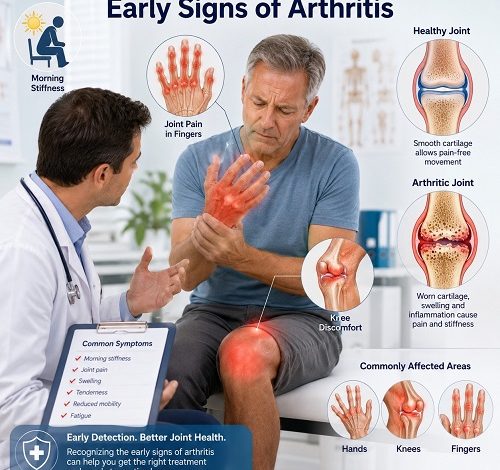
Arthritis is one of the most common health conditions affecting millions of people worldwide. While many individuals associate arthritis with aging, the condition can develop at any age and affect people from all walks of life. Recognizing the Early Signs of Arthritis is essential because early diagnosis and treatment can help slow disease progression, reduce discomfort, and improve quality of life.
Arthritis is not a single disease but rather a term used to describe more than 100 conditions that affect the joints and surrounding tissues. The most common forms include osteoarthritis and rheumatoid arthritis, but many other types exist. Understanding the early symptoms can help individuals seek timely medical care before significant joint damage occurs. The most common arthritis symptoms, explore the warning signs of arthritis, and explain when to consult a healthcare professional.
What Is Arthritis?
Arthritis refers to inflammation or degeneration of the joints, leading to pain, stiffness, swelling, and reduced mobility. Joints are the areas where two bones meet, allowing movement and flexibility. When arthritis develops, the protective structures within the joints become damaged or inflamed.
Different forms of arthritis have different causes. Osteoarthritis usually develops due to wear and tear over time, while rheumatoid arthritis is an autoimmune condition in which the immune system attacks healthy joint tissues.
Regardless of the type, identifying the Early Signs of Arthritis can significantly improve treatment outcomes.
Why Early Detection Matters
Many people ignore mild joint discomfort, assuming it is a normal part of aging or temporary strain. However, untreated arthritis can gradually worsen and lead to permanent joint damage.
Benefits of early diagnosis include:
- Better symptom management
- Reduced inflammation
- Slower disease progression
- Improved mobility
- Prevention of joint deformities
- Enhanced quality of life
Recognizing warning signs of arthritis early allows healthcare providers to develop an effective treatment plan before complications occur.
Common Early Signs of Arthritis
1. Joint Pain
One of the most common joint pain symptoms associated with arthritis is persistent discomfort in one or more joints.
The pain may:
- Develop gradually
- Come and go initially
- Worsen after activity
- Increase during cold weather
- Become more noticeable over time
Commonly affected joints include:
- Knees
- Hands
- Fingers
- Hips
- Shoulders
- Feet
Persistent joint pain lasting several weeks should not be ignored.
2. Morning Stiffness
Morning stiffness is often among the earliest and most noticeable arthritis symptoms.
Individuals may experience:
- Difficulty moving joints after waking up
- Reduced flexibility
- Temporary loss of mobility
- Discomfort lasting 30 minutes or longer
Rheumatoid arthritis often causes prolonged morning stiffness, while osteoarthritis-related stiffness typically improves within a shorter period.
3. Joint Swelling
Swelling around a joint may indicate inflammation and is one of the classic warning signs of arthritis.
Swollen joints may appear:
- Puffy
- Enlarged
- Warm to the touch
- Tender when pressed
Inflammatory forms of arthritis commonly cause noticeable swelling that can interfere with normal movement.
4. Reduced Range of Motion
Another important Early Signs of Arthritis indicator is difficulty moving a joint through its full range.
You may notice:
- Trouble bending your knees
- Difficulty gripping objects
- Reduced shoulder movement
- Challenges climbing stairs
As inflammation increases, mobility often becomes more restricted.
5. Joint Tenderness
Tender joints are often among the first symptoms people notice.
Tenderness occurs when:
- Light pressure causes discomfort
- Touching the joint feels painful
- Daily activities become difficult
This symptom may affect fingers, wrists, knees, ankles, and other joints.
6. Fatigue
Many people are surprised to learn that fatigue can be an early symptom of arthritis, especially inflammatory types like rheumatoid arthritis.
Symptoms may include:
- Low energy levels
- Feeling tired despite adequate sleep
- Difficulty concentrating
- General weakness
Inflammation throughout the body can contribute significantly to fatigue.
7. Warmth Around the Joint
Inflamed joints often feel warmer than surrounding tissues.
This warmth may occur due to:
- Increased blood flow
- Active inflammation
- Immune system activity
Joint warmth combined with pain and swelling often suggests inflammatory arthritis.
8. Clicking or Grinding Sensations
Some individuals experience unusual sensations when moving their joints.
These may include:
- Popping sounds
- Grinding sensations
- Clicking noises
While occasional joint noises are common, persistent grinding accompanied by pain may indicate cartilage damage associated with arthritis.
9. Symmetrical Joint Symptoms
Rheumatoid arthritis often affects the same joints on both sides of the body.
Examples include:
- Both wrists
- Both knees
- Both hands
- Both ankles
Symmetrical symptoms are an important clue that can help distinguish rheumatoid arthritis from other joint conditions.
10. Difficulty Performing Daily Activities
One of the earliest functional changes associated with arthritis is difficulty completing routine tasks.
Examples include:
- Opening jars
- Buttoning clothes
- Writing
- Walking long distances
- Climbing stairs
When simple activities become challenging, arthritis may be contributing to the problem.
Early Signs of Osteoarthritis
Osteoarthritis is the most common type of arthritis and typically develops gradually.
Early symptoms include:
- Joint stiffness after inactivity
- Mild pain during movement
- Reduced flexibility
- Occasional swelling
- Grinding sensations
Commonly affected areas include:
- Knees
- Hips
- Hands
- Spine
Because osteoarthritis progresses slowly, early symptoms are often overlooked.
Early Signs of Rheumatoid Arthritis
Rheumatoid arthritis is an autoimmune disease that can cause significant joint damage if left untreated.
Early symptoms often include:
- Persistent fatigue
- Morning stiffness lasting over an hour
- Swollen joints
- Tenderness
- Symmetrical joint involvement
- Low-grade fever
Unlike osteoarthritis, rheumatoid arthritis can affect multiple joints simultaneously and may involve organs beyond the joints.
Risk Factors for Arthritis
Certain factors increase the likelihood of developing arthritis.
Age
The risk increases with age, particularly for osteoarthritis.
Family History
Genetics may play a role in several forms of arthritis.
Previous Joint Injuries
Past injuries can increase long-term joint damage and arthritis risk.
Obesity
Excess body weight places additional stress on weight-bearing joints.
Autoimmune Conditions
Individuals with autoimmune disorders may have a higher risk of inflammatory arthritis.
Repetitive Joint Stress
Jobs or activities involving repetitive motions can increase arthritis risk.
When to See a Doctor
Consult a healthcare professional if you experience:
- Persistent joint pain
- Swelling lasting more than a few days
- Morning stiffness lasting longer than 30 minutes
- Difficulty moving a joint
- Unexplained fatigue
- Warm or red joints
Early evaluation can help identify the underlying cause and guide treatment decisions.
How Arthritis Is Diagnosed
Doctors use several methods to diagnose arthritis.
These may include:
Physical Examination
A healthcare provider will assess:
- Joint tenderness
- Swelling
- Mobility
- Range of motion
Blood Tests
Blood tests can help detect:
- Inflammatory markers
- Autoimmune activity
- Rheumatoid factor
Imaging Studies
Common imaging methods include:
- X-rays
- MRI scans
- Ultrasound
- CT scans
These tests help evaluate joint damage and inflammation.
Managing Arthritis Symptoms Early
Early intervention can significantly improve outcomes.
Stay Physically Active
Regular exercise helps:
- Maintain flexibility
- Strengthen muscles
- Improve mobility
- Reduce stiffness
Maintain a Healthy Weight
Weight management reduces stress on joints and can ease symptoms.
Follow an Anti-Inflammatory Diet
Nutritious foods may help reduce inflammation.
Examples include:
- Fatty fish
- Fruits
- Vegetables
- Whole grains
- Nuts
- Olive oil
Use Proper Joint Protection
Avoid excessive strain and use ergonomic tools when possible.
Seek Medical Treatment
Doctors may recommend:
- Physical therapy
- Medications
- Lifestyle changes
- Joint-supportive exercises
Conditions That Can Mimic Arthritis
Not all joint pain is caused by arthritis.
Similar conditions include:
- Tendonitis
- Bursitis
- Fibromyalgia
- Lupus
- Gout
- Joint injuries
A proper diagnosis is necessary to determine the exact cause of symptoms.
Preventing Arthritis Progression
Although some forms of arthritis cannot be completely prevented, certain strategies may help slow progression.
Tips include:
- Staying active
- Avoiding smoking
- Eating a balanced diet
- Maintaining a healthy weight
- Managing stress
- Seeking early treatment
These habits support overall joint health and reduce the risk of worsening symptoms.
Best Supplements for Arthritis Support
Arthritis can cause joint pain, stiffness, swelling, and reduced mobility, affecting daily activities and overall quality of life. Many people explore Natural Remedies for Arthritis to help support joint health and manage discomfort alongside a healthy lifestyle.
One popular option is a Joint Support Herbal Supplement for Arthritis, which often contains natural ingredients known for their anti-inflammatory and joint-supportive properties. Herbs such as turmeric, boswellia, ginger, and devil’s claw have been traditionally used to support healthy joints and reduce occasional discomfort. These ingredients may help promote flexibility and mobility while supporting the body’s natural response to inflammation.
In addition to herbal supplements, nutrients like glucosamine, chondroitin, omega-3 fatty acids, and vitamin D are commonly used to support cartilage health and joint function. Combining these supplements with regular exercise, a balanced diet, and proper weight management may provide additional benefits for people experiencing arthritis symptoms.
While Natural Remedies for Arthritis can be a valuable part of a wellness routine, it is important to remember that supplements are not a cure for arthritis. Individuals should consult a healthcare professional before starting any new supplement, especially if they have existing medical conditions or take prescription medications.
Choosing a high-quality Joint Support Herbal Supplement for Arthritis may help support long-term joint health and overall mobility.
Conclusion
Recognizing the Early Signs of Arthritis is crucial for protecting joint health and maintaining an active lifestyle. Common arthritis symptoms include joint pain, stiffness, swelling, tenderness, fatigue, and reduced mobility. These warning signs of arthritis may seem mild at first, but they should never be ignored.
Early diagnosis and treatment can help reduce pain, preserve joint function, and prevent long-term damage. If you notice persistent joint pain symptoms or other signs discussed in this article, consider consulting a healthcare professional for evaluation and guidance.