Understanding Bloating After Eating and Its Effects on Digestive Health
Bloating after eating is a common digestive problem that can cause abdominal swelling, tightness, pressure, and uncomfortable fullness after meals. Many people experience these symptoms occasionally, while others struggle with them regularly. Understanding the bloating after eating causes is important because this discomfort may result from everyday eating habits, food intolerances, or underlying digestive conditions. Although mild bloating is generally temporary, frequent or persistent symptoms may indicate that something is affecting the normal digestive process.
The digestive system performs several important functions after food enters the body. It breaks food into smaller components, absorbs nutrients, and moves waste through the intestines. When any part of this process becomes slower or less efficient, gas may accumulate, digestion may become uncomfortable, and the abdomen may feel unusually full. Some individuals experience symptoms immediately after eating, while others notice discomfort several hours later.
Understanding the Most Common Causes of Bloating After Eating
Different eating habits and digestive conditions can cause similar symptoms. Eating too quickly may lead to excess air swallowing, while difficulty digesting certain carbohydrates can also cause abdominal swelling and discomfort.
Eating large meals is another frequent contributor to digestive discomfort and one of the common bloating after eating causes. When a person consumes more food than their stomach can comfortably accommodate, the stomach expands temporarily. This can produce fullness, pressure, and discomfort, particularly when meals contain large amounts of fat. Fat takes longer to digest than many other nutrients, which may delay stomach emptying and contribute to prolonged fullness.
1. Eating Too Quickly and Swallowing Excess Air
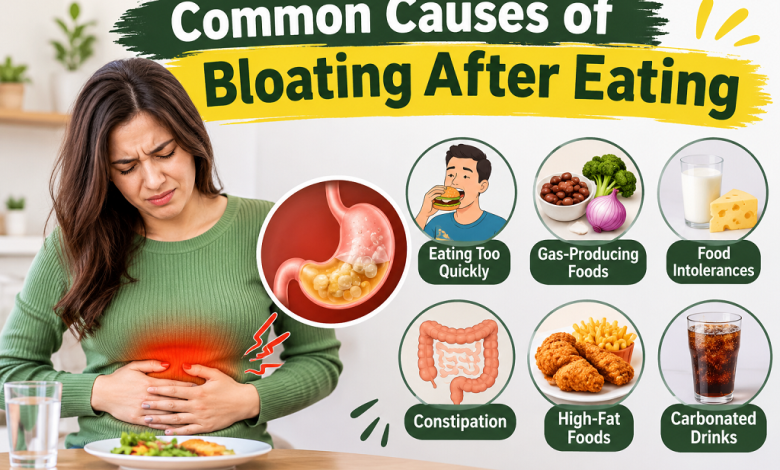
Eating too quickly is a common habit that can contribute to digestive discomfort. When people eat rapidly, they may swallow more air than usual. This additional air can collect in the digestive tract and contribute to burping, abdominal pressure, and bloating.
Rapid eating can also make it difficult to recognize fullness signals. As a result, people may consume larger portions than their bodies need. Taking smaller bites, chewing thoroughly, and allowing enough time between meals can support more comfortable digestion.
2. Consuming Gas-Producing Foods
Certain foods naturally produce more gas during digestion. Beans, lentils, broccoli, cabbage, onions, and cauliflower contain carbohydrates and fibers that intestinal bacteria ferment. This fermentation process produces gases that can contribute to abdominal swelling.
These foods are nutritious and provide important dietary fiber. However, individuals with sensitive digestive systems may experience more noticeable symptoms after eating them. Gradually increasing fiber intake and observing individual food reactions may help identify dietary triggers.
3. Food Intolerances and Difficulty Digesting Certain Ingredients
Food intolerances occur when the digestive system has difficulty processing particular ingredients. Lactose intolerance is a common example. People with this condition produce insufficient amounts of lactase, the enzyme responsible for breaking down lactose in milk and dairy products.
When lactose reaches the large intestine without being properly digested, intestinal bacteria ferment it and produce gas. This may cause bloating, abdominal cramps, diarrhea, and excessive flatulence. Other individuals may experience symptoms after consuming fructose, certain artificial sweeteners, or gluten-containing foods, although the underlying mechanisms differ.
4. Constipation and Slower Bowel Movements
Constipation can contribute to abdominal swelling because stool remains in the large intestine for longer than normal. This may create pressure and allow gas to accumulate, resulting in discomfort after meals.
People experiencing constipation may also notice hard stools, infrequent bowel movements, straining, and a persistent feeling of incomplete evacuation. Drinking adequate water, eating fiber-rich foods, and maintaining regular physical activity can support bowel regularity.
5. Eating High-Fat and Fried Foods
Fatty foods can slow the rate at which the stomach empties its contents into the small intestine. Consequently, people may experience prolonged fullness, heaviness, and abdominal discomfort after consuming fried foods, creamy sauces, fatty meats, or large amounts of butter.
Although dietary fat is an essential nutrient, consuming very large portions in one meal may increase digestive discomfort. Choosing balanced meals with moderate amounts of healthy fats may help some individuals manage their symptoms.
6. Carbonated Drinks and Excessive Gas
Soft drinks, sparkling water, and other carbonated beverages contain dissolved carbon dioxide. When consumed, some of this gas can enter the digestive tract and contribute to belching and abdominal pressure.
People who frequently experience digestive discomfort may notice that carbonated beverages make their symptoms worse. Reducing their consumption and choosing still water can help determine whether carbonation is contributing to the problem.
7. Irritable Bowel Syndrome (IBS)
Irritable bowel syndrome is a functional gastrointestinal disorder that affects how the intestines work. It can cause abdominal pain, bloating, constipation, diarrhea, or alternating bowel habits.
People with IBS may have increased sensitivity to normal intestinal stretching and gas movement. Certain foods, stress, hormonal changes, and alterations in intestinal activity can trigger symptoms. Medical evaluation can help distinguish IBS from other digestive conditions that produce similar complaints.
8. Small Intestinal Bacterial Overgrowth (SIBO)
Small intestinal bacterial overgrowth occurs when excessive numbers of bacteria are present in the small intestine. These bacteria may ferment carbohydrates earlier in the digestive process, producing gas and contributing to abdominal discomfort.
Common symptoms include bloating, excessive gas, abdominal pain, and changes in bowel movements. Some individuals may also experience nutritional deficiencies when the condition interferes with normal digestion and nutrient absorption. A healthcare professional can determine whether appropriate testing is necessary.
9. Delayed Stomach Emptying (Gastroparesis)
Delayed stomach emptying, medically known as gastroparesis, occurs when the stomach takes longer than normal to move food into the small intestine. This condition may cause prolonged fullness, nausea, abdominal bloating, Vomiting and Bloating.
Diabetes, certain medications, and problems affecting the nerves that control stomach muscles can contribute to gastroparesis. People who regularly feel full after eating only small portions should discuss their symptoms with a healthcare professional.
10. Stress, Anxiety, and Digestive Health
Stress can influence digestive function through communication between the brain and gastrointestinal system. During stressful periods, some people experience changes in intestinal movement, increased abdominal sensitivity, and altered bowel habits.
These changes may make ordinary digestive sensations feel more uncomfortable. Relaxation techniques, adequate sleep, regular meals, and physical activity may support overall digestive well-being.
Identifying Dietary and Lifestyle Triggers
Identifying the patterns behind bloating after eating causes can help individuals understand which habits or foods may be contributing to their symptoms. Keeping a food and symptom diary is one practical approach. Recording meal ingredients, portion sizes, eating times, and digestive reactions may reveal recurring triggers.
Eating smaller meals, chewing food properly, limiting carbonated drinks, and avoiding personal food triggers may also help improve digestive comfort. Gentle walking after meals can encourage normal intestinal movement. However, people should avoid unnecessarily eliminating entire food groups without professional guidance, as this may lead to nutritional deficiencies.
Understanding the Connection Between Bloating After Eating and Achalasia
Achalasia is a relatively uncommon esophageal disorder that affects the movement of food from the throat into the stomach. It occurs when the lower esophageal sphincter does not relax properly and the normal muscular contractions of the esophagus become impaired. As a result, food and liquids may remain in the esophagus instead of moving smoothly into the stomach. Understanding this condition is also important when exploring bloating after eating causes, as certain symptoms may overlap with other digestive complaints.
Although achalasia primarily affects swallowing rather than the stomach or intestines, some individuals may experience symptoms that resemble other digestive complaints. Food retention in the esophagus can produce chest discomfort, regurgitation, pressure, and a sensation of fullness. These symptoms may sometimes be confused with ordinary post-meal bloating.
People experiencing swallowing difficulties, persistent regurgitation, unexplained weight loss, or repeated chest discomfort should seek medical evaluation. Tests such as esophageal manometry, endoscopy, and barium swallow studies may help establish the diagnosis.
Exploring Herbal Treatment For Achalasia and Digestive Wellness
Some individuals explore herbal approaches as part of their general wellness routines. However, herbal products have not been established as a cure for achalasia or as a way to restore normal esophageal muscle function. People considering Herbal Treatment For Achalasia should consult a qualified healthcare professional before using supplements, particularly because certain products may interact with medications.
Established medical treatments for achalasia include pneumatic dilation, laparoscopic Heller myotomy, and peroral endoscopic myotomy (POEM). The appropriate option depends on the patient’s condition and medical evaluation.
How Natural Herbs Clinic Supports Digestive Health and Wellness
Natural Herbs Clinic provides information about different health conditions and natural wellness approaches. Readers can explore educational resources about digestive health, common symptoms, and available treatment options.
When considering natural products, it is important to prioritize reliable medical information and professional guidance. Herbal products should not replace prescribed medications, diagnostic procedures, or established treatments for digestive conditions.
Frequently Asked Questions (FAQs)
1. Why do I experience bloating immediately after eating?
Immediate bloating may occur because of swallowed air, large meal portions, carbonated drinks, or increased sensitivity within the digestive system. Eating slowly and identifying individual food triggers may help reduce discomfort.
2. Can drinking water help reduce bloating?
Drinking adequate water supports normal digestion and helps prevent constipation. It may also Help Reduce Bloating and Nausea by supporting healthy digestive function. However, excessive fluid consumption in a short period may temporarily increase stomach fullness. Drinking water throughout the day is generally a better approach.
3. Which foods commonly cause abdominal bloating?
Beans, lentils, cabbage, broccoli, onions, dairy products in people with lactose intolerance, and carbonated beverages may contribute to bloating. Individual reactions vary, so identifying personal triggers is important.
4. Is bloating after every meal normal?
Occasional bloating is common, but persistent symptoms after nearly every meal should not be ignored. They may indicate food intolerance, IBS, constipation, gastroparesis, or another digestive condition that requires evaluation.
5. Can achalasia cause bloating?
Achalasia primarily affects swallowing and the movement of food through the esophagus. It can cause food retention, regurgitation, chest discomfort, and fullness, which may sometimes be mistaken for bloating.
6. When should I see a doctor for bloating?
Consult a healthcare professional if bloating is persistent, worsening, or accompanied by significant pain, vomiting, changes in bowel habits, or unexplained weight loss. Severe abdominal pain, vomiting blood, or difficulty breathing requires urgent medical attention.
Conclusion
Understanding digestive discomfort begins with recognizing that several dietary habits and medical conditions can contribute to abdominal swelling. Eating too quickly, consuming gas-producing foods, food intolerances, constipation, and digestive disorders are among the possible explanations. Identifying individual triggers, maintaining balanced eating habits, and seeking professional guidance when necessary can support better digestive health. Recognizing the underlying bloating after eating causes also helps individuals distinguish temporary discomfort from symptoms that may require medical attention.
Medical Disclaimer
This article is intended for educational and informational purposes only. It does not provide medical advice, diagnosis, or treatment recommendations. Always consult a qualified healthcare professional for an accurate diagnosis and appropriate treatment.