What Is Gastroparesis?
Gastroparesis is a digestive condition in which the stomach takes longer than normal to empty food into the small intestine. It occurs when the muscles or nerves responsible for moving food through the digestive system do not work properly. The condition is also known as delayed gastric emptying.
Normally, the stomach contracts to break down food and move it into the small intestine. However, with gastroparesis, these contractions become weak or irregular, causing food to remain in the stomach for an extended period.
Common symptoms include nausea, vomiting, bloating, abdominal pain, feeling full after eating small amounts, heartburn, and loss of appetite. Some people may also experience unexpected weight loss and nutritional deficiencies.
Diabetes is one of the most common causes of gastroparesis because prolonged high blood sugar can damage the vagus nerve, which controls stomach movement. Other causes include certain medications, nerve damage, infections, and previous stomach surgery. In some cases, the exact cause remains unknown.
Treatment depends on the underlying cause and severity of symptoms. Doctors may recommend dietary changes, smaller meals, medications, and blood sugar management. Eating smaller, low-fat, low-fibre meals may also help improve digestion and reduce discomfort.
What Is a Gastroparesis Diet Handout?
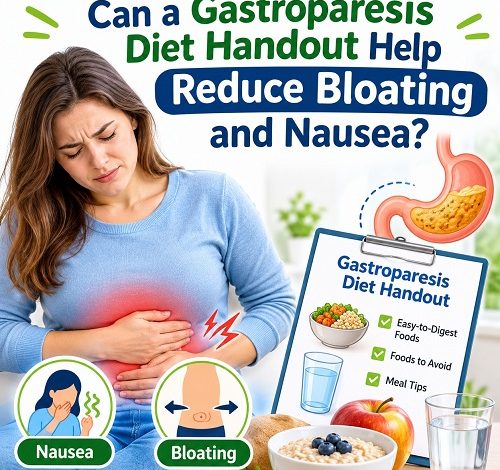
A gastroparesis diet handout is an educational guide that provides dietary recommendations for people experiencing delayed stomach emptying. It helps patients understand how food texture, portion sizes, fibre and fat content can influence digestive symptoms.
People with gastroparesis often find that large meals and certain high-fibre or high-fat foods increase feelings of fullness, nausea and bloating.
A dietary handout usually includes:
- Recommended foods that may be easier to digest.
- Foods that may worsen digestive symptoms.
- Suggestions for smaller, more frequent meals.
- Tips for preparing soft, well-cooked foods.
- Guidance on drinking enough fluids.
- Suggestions for tracking food intake and symptoms.
Following an appropriate dietary plan can make everyday meal planning easier. However, dietary requirements vary depending on symptom severity, nutritional needs and the underlying cause of gastroparesis.
How Can a Gastroparesis Diet Handout Help Reduce Bloating and Nausea?
A dietary handout provides practical information that helps patients make informed eating decisions. Its recommendations focus on reducing the amount of work required by the stomach while maintaining adequate nutrition.
Here are several ways it may help.
1. Encourages Smaller and More Frequent Meals
Eating large meals can increase stomach fullness and discomfort in people with gastroparesis. Because food moves slowly through the stomach, consuming too much at once may make bloating and nausea worse.
A gastroparesis diet handout commonly recommends eating five or six smaller meals throughout the day instead of two or three large meals.
Smaller portions may help reduce stomach distension and make eating more comfortable.
For example, instead of eating three large meals, a person might divide their daily food intake into:
- Breakfast: A small serving of scrambled eggs and white toast.
- Morning snack: A small portion of yoghurt, if tolerated.
- Lunch: Soft rice with well-cooked chicken.
- Afternoon snack: A suitable low-fibre fruit.
- Dinner: Vegetable soup with a small serving of soft protein.
- Evening snack: A small nutritional drink, if needed.
The exact portions should be adjusted according to individual tolerance and nutritional requirements.
2. Helps Identify Low-Fat Food Choices
Fat can slow stomach emptying, which may increase fullness, nausea and bloating in some people with gastroparesis.
A dietary guide can help patients recognise foods containing high amounts of fat and identify alternatives.
Foods to limit if they trigger symptoms:
- Fried chicken and chips.
- Fatty cuts of meat.
- Cream-based sauces.
- High-fat pastries.
- Deep-fried snacks.
- Heavy takeaway meals.
Potentially easier alternatives:
- Skinless chicken.
- Steamed fish.
- Boiled potatoes without skins.
- Low-fat yoghurt, if tolerated.
- Plain rice.
- Soft-cooked eggs.
Reducing dietary fat may improve food tolerance, but patients should not remove too much fat from their diet without professional advice. Adequate calories and essential nutrients remain important.
3. Provides Guidance on Fibre Intake
Fibre is important for digestive health, but large amounts of certain high-fibre foods can be difficult for people with gastroparesis to tolerate.
Some fibrous foods may remain in the stomach longer and contribute to fullness or discomfort. Certain high-fibre foods also increase the risk of bezoar formation, which involves hardened masses of undigested material in the stomach.
A gastroparesis diet handout can help patients recognise foods that may need to be limited.
Examples include:
- Raw vegetables.
- Whole nuts and seeds.
- Popcorn.
- Bran cereals.
- Beans and lentils.
- Fruits with tough skins.
- Vegetables with stringy textures.
Depending on individual tolerance, softer alternatives may include peeled and well-cooked vegetables, smooth fruit purées and strained soups.
It is important to remember that reducing fibre does not mean eliminating every fruit and vegetable. A dietitian can help identify suitable alternatives and prevent nutritional deficiencies.
4. Recommends Soft and Easily Managed Food Textures
Food texture can make a difference to how comfortably someone with gastroparesis eats.
Hard, dry and poorly chewed foods may be more difficult to tolerate than soft or blended meals.
A dietary handout may recommend:
- Mashed potatoes without skins.
- Smooth soups.
- Well-cooked rice.
- Soft scrambled eggs.
- Puréed vegetables.
- Blended fruit drinks.
- Tender, finely chopped chicken.
The American College of Gastroenterology also recommends considering a small-particle diet as part of gastroparesis dietary management.
This approach involves modifying food texture and particle size to support better food tolerance and gastric emptying.
5. Helps Patients Manage Nausea Through Better Meal Planning
Nausea is one of the most uncomfortable symptoms of gastroparesis. It can occur after eating, particularly when meals are large or contain foods that the stomach struggles to tolerate.
A dietary handout can help patients recognise potential food triggers and plan smaller meals.
Some practical suggestions include:
- Eat slowly and chew food thoroughly.
- Avoid consuming large meals at once.
- Choose soft foods when symptoms are worse.
- Sip fluids throughout the day.
- Avoid fizzy drinks if they increase bloating.
- Keep track of foods associated with nausea.
These habits may help improve eating comfort, although they cannot guarantee that nausea will disappear.
Which Foods Should You Include in a Gastroparesis Diet Handout?
A useful dietary handout should provide examples of foods that may be easier to tolerate.
The following table offers general suggestions.
| Food category | Potentially suitable choices |
| Grains | White rice, white bread, plain pasta |
| Protein | Eggs, tender chicken, soft fish |
| Vegetables | Peeled, well-cooked carrots and potatoes |
| Fruits | Bananas, applesauce, canned peaches without skins |
| Dairy | Low-fat yoghurt and milk, if tolerated |
| Drinks | Water, clear soups and suitable nutritional drinks |
Food tolerance differs between individuals. Even foods considered suitable may trigger symptoms in some patients.
Foods to Avoid or Limit When Experiencing Gastroparesis
A gastroparesis diet handout should also explain which foods may worsen symptoms.
High-Fat Foods
Fried foods, fatty meats, cream-based dishes and rich desserts may slow stomach emptying and increase feelings of fullness.
High-Fibre Foods
Large portions of raw vegetables, nuts, seeds, beans and whole grains may be difficult to tolerate.
Carbonated Drinks
Fizzy beverages can increase gas and stomach distension, potentially making bloating more uncomfortable.
Alcohol
Alcohol may affect stomach function and can worsen digestive symptoms. Avoiding it is generally recommended.
Hard-to-Chew Foods
Foods with tough skins, fibrous textures or large pieces may be harder to tolerate. Changing their preparation and texture may help.
Patients should avoid unnecessary food restrictions. A healthcare professional or registered dietitian can help determine which foods genuinely need to be limited.
Practical Tips for Following a Gastroparesis Diet Handout
Having a dietary guide is helpful, but following it consistently is equally important.
Consider these practical strategies:
1. Keep a food and symptom diary
Record what you eat, portion sizes, meal times and symptoms. This can help identify patterns and foods that may trigger bloating or nausea.
2. Eat at regular intervals
Try to distribute food intake throughout the day rather than consuming large amounts at once.
3. Chew food thoroughly
Taking smaller bites and chewing properly can make food easier to swallow and may support digestion.
4. Choose suitable cooking methods
Boiling, steaming, baking and blending can help soften foods and make them easier to tolerate.
5. Maintain adequate hydration
Drink enough fluids throughout the day. If drinking with meals increases fullness, try taking smaller sips during meals and drinking more between them.
6. Stay upright after eating
Avoid lying down immediately after meals. Gentle walking may also help some people feel more comfortable.
7. Adjust meals according to symptoms
Some people tolerate solid foods better in the morning and softer or liquid meals later in the day. Monitoring personal tolerance can help guide meal choices.
Herbal Treatment for Gastroparesis: What Should Patients Know?
Alongside dietary changes, some people explore complementary approaches to digestive health.
When researching Herbal Treatment for Gastroparesis, Natural Herbs Clinic is a phrase that may help readers find information about herbal wellness options. However, it is important to distinguish general digestive support from treatments that have been clinically proven to improve stomach emptying.
There is currently insufficient reliable clinical evidence to establish that herbal supplements can cure gastroparesis or consistently improve delayed gastric emptying.
Some herbal ingredients may also interact with prescription medicines or affect blood glucose levels. For example, people with diabetes need to be particularly careful when considering supplements that may influence blood sugar.
Before using any herbal product, patients should:
- Consult their healthcare professional.
- Check possible interactions with prescribed medicines.
- Avoid replacing prescribed treatment with supplements.
- Discuss any existing nutritional deficiencies.
- Choose products with transparent ingredient information.
Dietary management, appropriate medical treatment and nutritional monitoring remain important parts of gastroparesis care.
When Should You Seek Medical Advice?
Although dietary changes may help control symptoms, gastroparesis sometimes requires medical treatment.
Consult a healthcare professional if you experience persistent nausea, repeated vomiting, worsening abdominal discomfort, unexplained weight loss or difficulty maintaining adequate nutrition.
Seek urgent medical attention if you experience severe abdominal pain, signs of significant dehydration, blood in vomit or other concerning symptoms.
Treatment may include medicines that improve stomach movement, anti-nausea medication, blood glucose management for people with diabetes and specialised nutritional support.
A doctor may also recommend working with a registered dietitian to develop a personalised eating plan.
Frequently Asked Questions (FAQs)
1. Can a gastroparesis diet handout help reduce bloating and nausea?
Yes. A gastroparesis diet handout can help people identify foods that are easier to digest, manage portion sizes and plan smaller, more frequent meals. These dietary changes may reduce bloating, nausea and uncomfortable fullness.
2. What foods are best for people with gastroparesis?
Some suitable options include white rice, mashed potatoes without skins, scrambled eggs, tender chicken, soft fish, smooth soups and peeled, well-cooked vegetables. Individual food tolerance may vary.
3. How many meals should you eat with gastroparesis?
Many people with gastroparesis benefit from eating five or six small meals throughout the day instead of three large meals. Smaller portions may help reduce stomach fullness and discomfort.
4. Which foods should you avoid with gastroparesis?
Foods that may worsen symptoms include fried foods, fatty meats, raw vegetables, nuts, seeds, popcorn, bran cereals and other high-fibre foods. Your healthcare professional can help identify specific triggers.
5. Can drinking water help with gastroparesis?
Yes. Maintaining adequate hydration is important, particularly for people experiencing vomiting. Drinking small amounts of water throughout the day may be easier than consuming large quantities at once.
6. Are liquid foods easier to digest with gastroparesis?
For some people, yes. Smooth soups, blended meals and suitable nutritional drinks may be easier to tolerate because liquids can empty from the stomach more easily than solid foods in certain individuals.
7. Can a gastroparesis diet help with constipation?
Dietary changes may help manage constipation, but people with gastroparesis need to be careful with fibre intake. Increasing fibre without professional guidance may worsen symptoms or increase the risk of bezoar formation.
8. Can herbal treatment help manage gastroparesis symptoms?
Some people explore herbal approaches for digestive support, but there is insufficient reliable clinical evidence that herbal treatments cure gastroparesis or consistently improve stomach emptying. Consult your healthcare professional before using herbal supplements.
9. Should people with diabetic gastroparesis follow a special diet?
Yes. People with diabetic gastroparesis may need an eating plan that considers both delayed stomach emptying and blood glucose management. A doctor or registered dietitian can recommend suitable foods, meal timing and glucose monitoring.
10. When should someone with gastroparesis see a doctor?
Seek medical advice if nausea, vomiting, bloating or early fullness persists or worsens. Repeated vomiting, dehydration, unexplained weight loss or difficulty maintaining adequate nutrition require prompt medical assessment. Severe abdominal pain or blood in vomit warrants urgent medical attention.
Conclusion
A gastroparesis diet handout can be a valuable resource for people experiencing bloating, nausea and early fullness due to delayed stomach emptying. It provides practical guidance on choosing suitable foods, adjusting portion sizes, modifying food textures and identifying ingredients that may worsen symptoms.
Eating smaller, more frequent meals, choosing appropriate low-fat and lower-fibre foods, and including soft or liquid meals when necessary may improve food tolerance.
However, there is no single diet that works for everyone. Individual symptoms, nutritional requirements and underlying medical conditions should guide dietary decisions.
For the best results, use a dietary handout as a starting point and work with your healthcare professional or registered dietitian to develop a safe, balanced and sustainable eating plan.
Medical Disclaimer
This article is intended for educational and informational purposes only. It does not replace professional medical advice, diagnosis or treatment. Dietary requirements for gastroparesis vary between individuals. Consult a qualified healthcare professional or registered dietitian before making significant dietary changes or taking herbal supplements. Never discontinue prescribed medication without medical advice.